Implications of a lower inflation target
We estimate that sustainably reducing inflation will be harder and more costly than the SARB assumes. In the absence of complementary government policies and buy-in from organs of the state and unions, the transition costs to a new target will be much higher than SARB asserts. This would keep borrowing costs high for households and firms and potentially undermine the credibility of the SARB. For a summary of our paper on the inflation targeting debate see here.
Taxpayers numbers in South Africa
While South Africa has approximately 5.2 million taxpayers above the tax free threshold, over a million of those are government employees. The latest available data show that the roughly 200 000 taxpayers who earn over R1 million per year pay about 45% of the total personal income tax take, with around 40 000 of those taxpayers working for government.

South Africa’s Fiscal Landscape
Codera Analytics’ Public Finance Chartpack for South Africa. This chartpack assesses South Africa’s fiscal landscape, demonstrating how EconData’s Public Finance module can be used to keep sophisticated public finance analysis up to date.

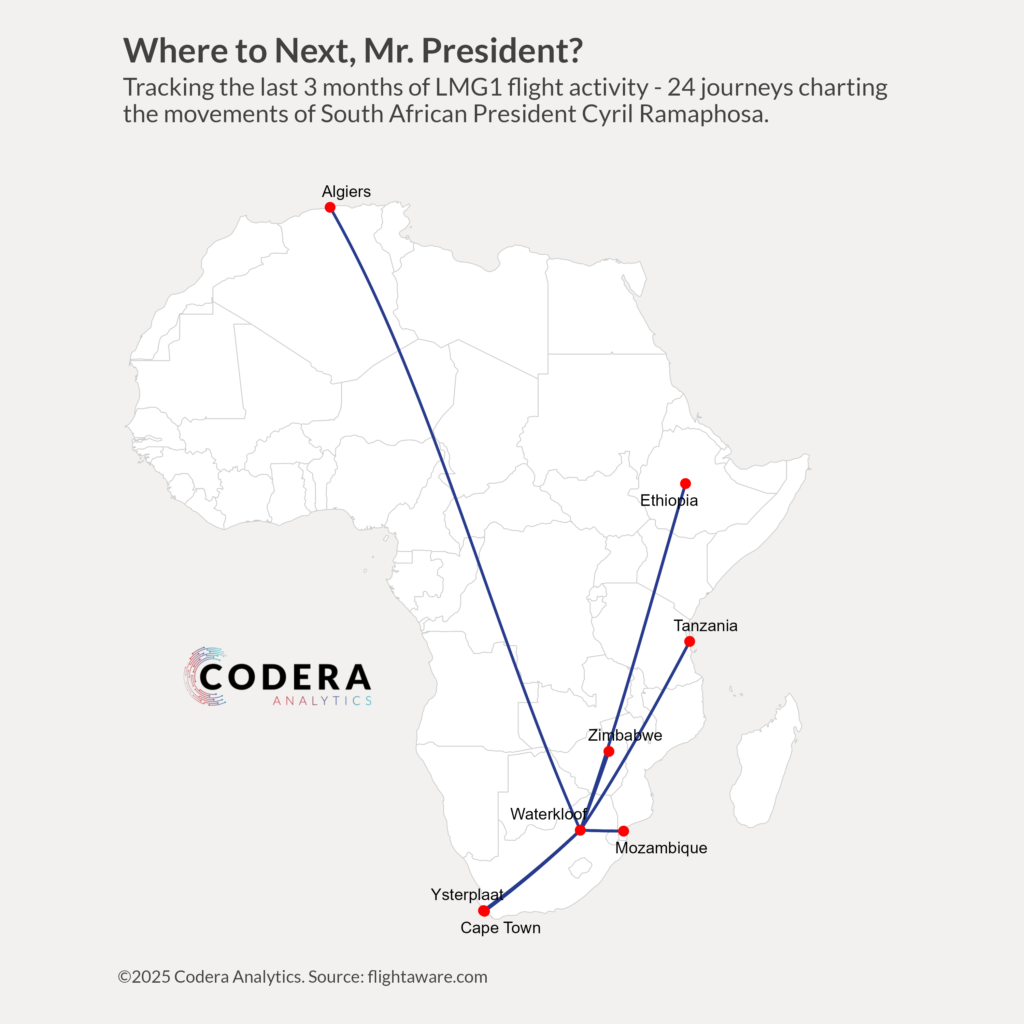
How much does SA’s president travel? A lot.
Over the last 90 days the aircraft has flown 24 flights – mostly between Cape Town and Pretoria (about 8 return flights) and about 5 return international flights. This post by Johan Hanekom details the president’s recent travels.
City property prices in South Africa
Are property prices keeping up with inflation? This post by Aidan Horn summarises developments in metro-level house prices relative to inflation. Cape Town is the only metro where property values have risen since 2010.

South African university patent activity
This post by Jan-Hendrik Pretorius shows that there has been a big increase in patent applications by South African universities over the first decade and a half of the 2000s, with Stellenbosch University, University of Cape Town and Witwatersrand University with the most applications.

Second hand car price and mileage on cars.co.za and WebuyCars
When looking for a used car, mileage and price are two key factors that often shape a buyer’s decision. This post by Johan Hanekom shows that cars.co.za have generally has lower milage, higher price vehicle listings. The post demonstrates that there are big differences in second-hand vehicle mileage and prices across brands on these platforms reflecting factors such as brand reputation, durability, resale value, and market demand for specific models.

Tax paid by income group in South Africa
The latest tax statistics for South Africa reveal that approximately 340 000 taxpayers earned over R1 million in 2023. This group, making up less around 5% of taxpayers, contributed over 45% of total personal income tax.

Informal economy measurement in South Africa
Given the debate about the size of the informal sector in SA, today’s post summarises Codera Analytics’ recent posts on measurement of the informal sector.
Retail coffee prices in SA
This post by Johan Hanekom looks at retail coffee prices at different retailers in South Africa.

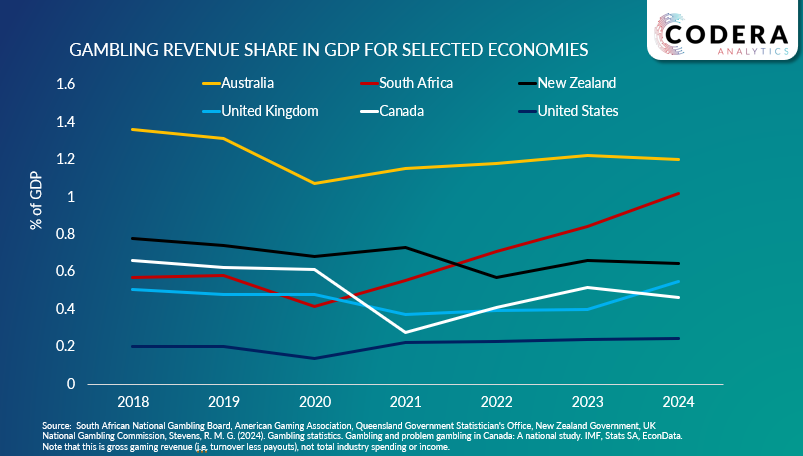
Gambling to GDP in selected economies
Gambling revenues account for over 1% of GDP in Australia and South Africa, meaningfully higher as a share of GDP than in New Zealand, Canada, the United Kingdom and the United States. Note that this is gross gaming revenue (i.e. turnover less payouts), not total industry spending or income.
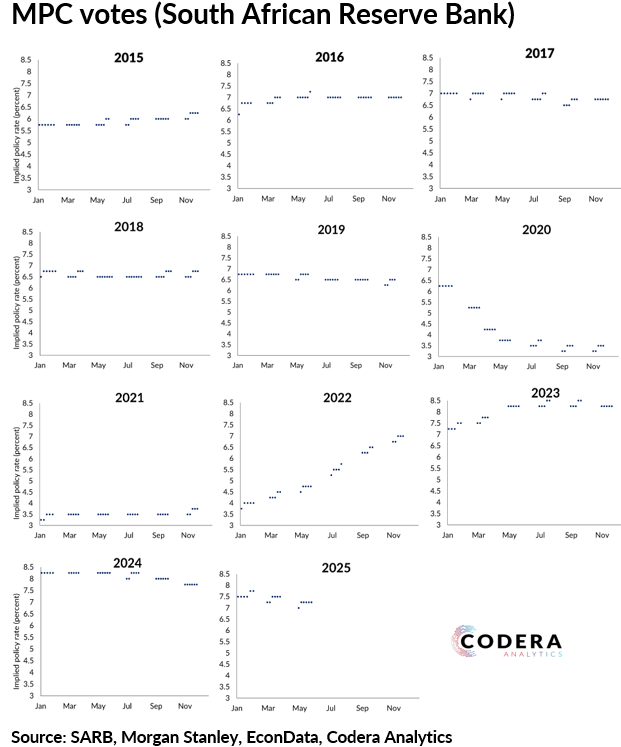
SARB MPC historical voting records
This post shows historical South African Reserve Bank (SARB) Monetary Policy Committee (MPC) votes for the appropriate level of the policy rate, showing periods when there was internal dissent about whether to hike/cut and evolving views among committee members about the appropriate policy rate setting.
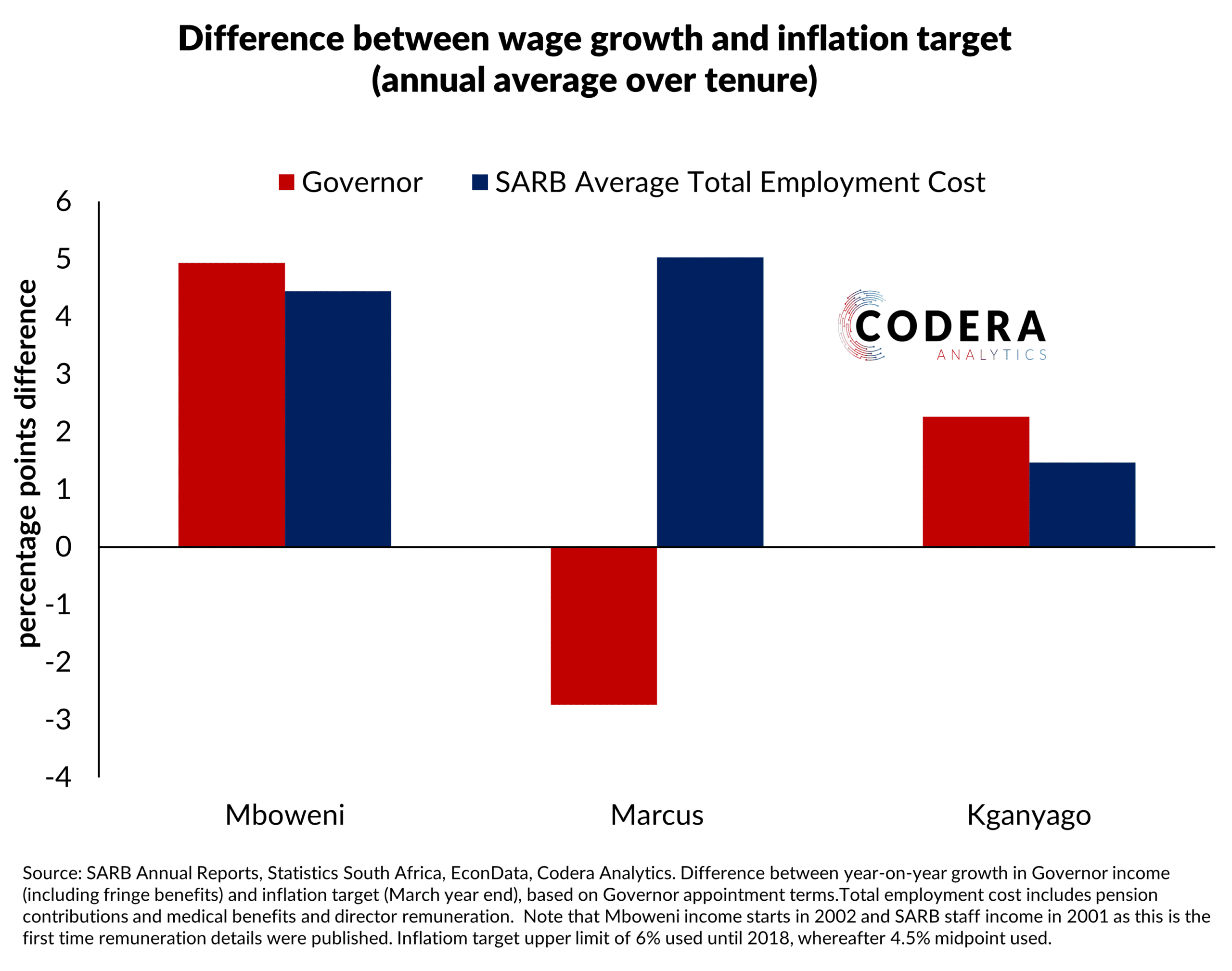
How committed has the SARB been to its inflation target?
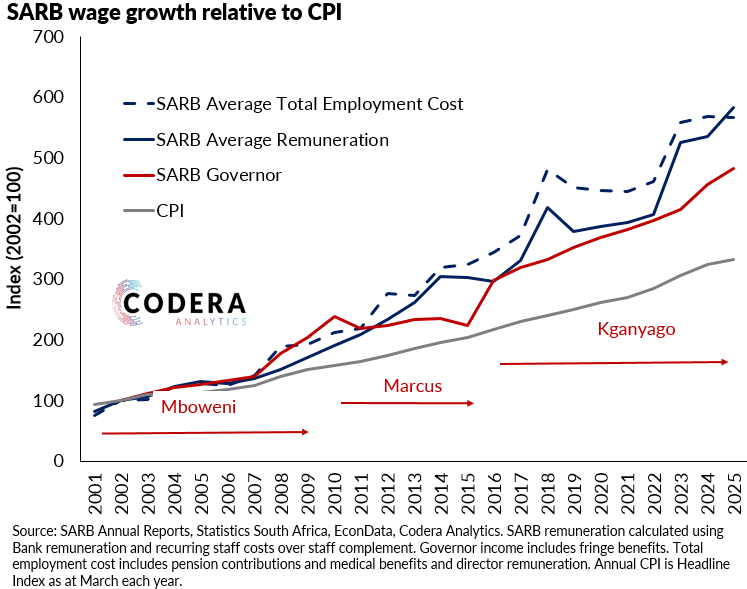
One way to measure how serious an inflation targeting central bank is about achieving its inflation target is whether it pays its staff wage increases that are in line with its inflation target. This post shows that under the last three governors, the SARB’s staff have received wage increases several percentage points higher than the inflation target.
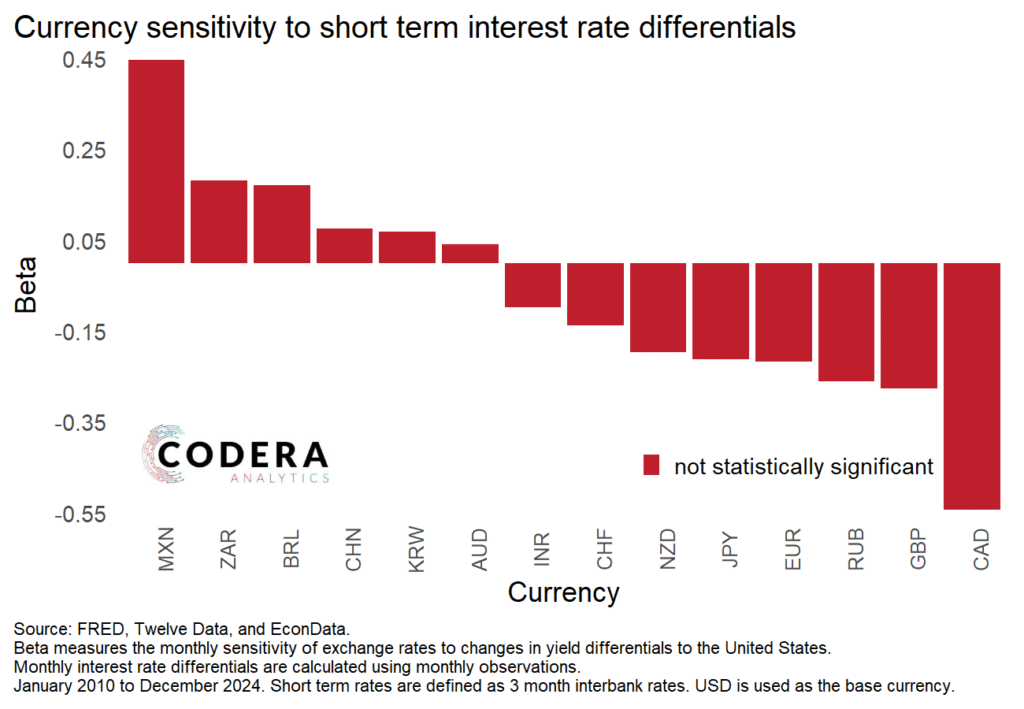
FX sensitivity to interest rate differentials
How sensitive are major currencies to interest rate differentials? This post by Oliver Guest compares different currencies’ interest rate beta, defined by regressing changes in each currency (relative to the USD as the base currency) against shifts in interest rate differentials.
World Bank Ranking of SA Ports
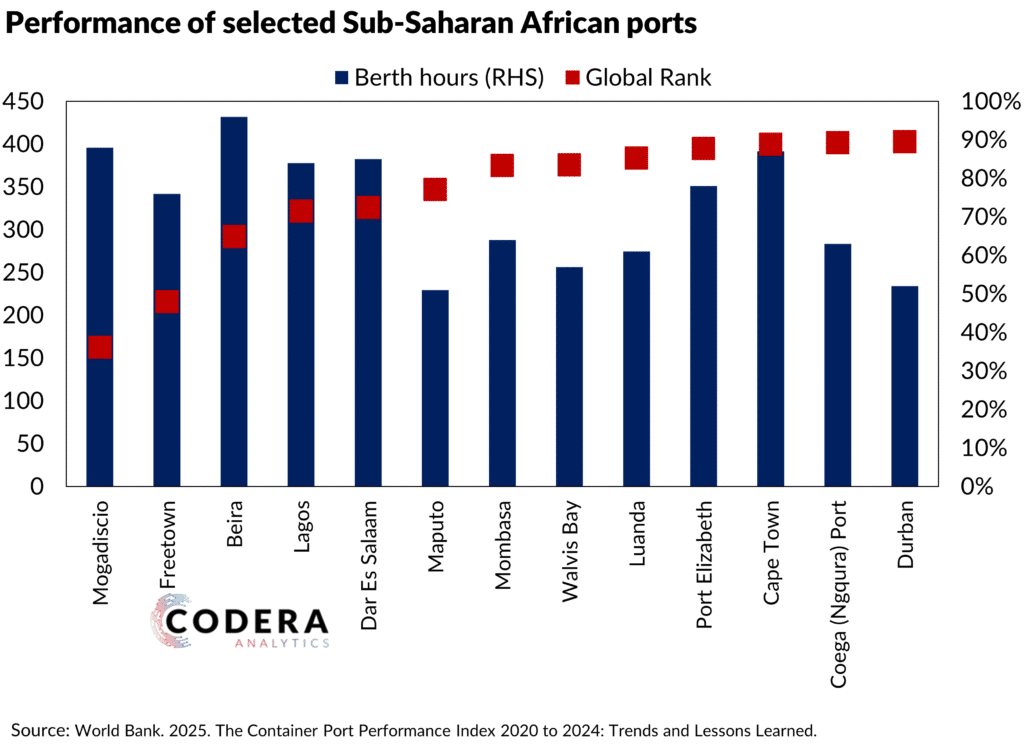
The World Bank has ranked South African ports right at the bottom of their rankings of global port performance. They ranked Port of Cape Town 400th, Port Elizabeth 395th, Durban 403rd (lowest globally), and Ngqura 402nd out of the 403 global ports considered. By comparison, seven out of the top ten ranked ports are in China.
Credit growth for major SA banks
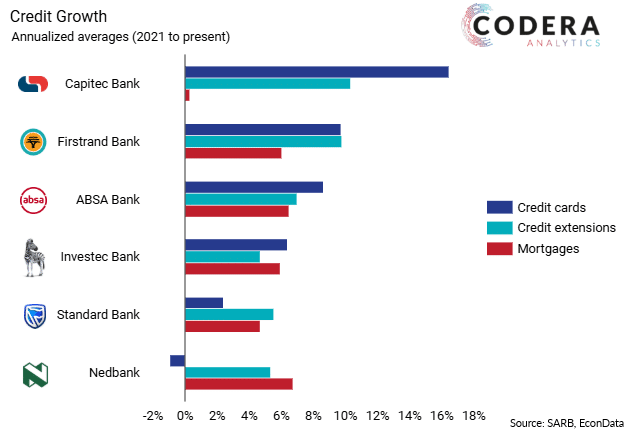
This post by Aidan Horn shows credit growth for major categories for South Africa’s major banks since 2021.
SA export volumes vs values
The improvement in South Africa’s exports reflects higher export prices, not an increase in export volumes. This represents a lost opportunity for South Africa, as South Africa’s terms of trade has been at historically high levels over recent years. But we were unable to sustainably increase the amount of commodities and commodity-related manufactured goods we export to take advantage of higher prices.

Rising tax burden in SA
This post by Sinead Morrow shows that South Africa’s tax burden has been steadily rising, driven by an increase in the personal income tax burden.

Is SA in a low inflation regime?
The South African Reserve Bank (SARB) governor recently said that South Africa is entering an era of low inflation. In this blog post, we argue that it is still too early to judge whether trend inflation has persistently fallen.

How much of the budget document was revised?
How much was the 2025 Budget document text revised since February? In today’s post by Johan Hanekom, we compare the frequency of key words in the Budget Review from February that was not tabled, and the March 2025 Budget Review. We show that the text changed little, with the frequency of words related to tax, reforms, debt and borrowing rising marginally and 2 mentions of wages removed.

Government support of auto industry in SA
The vehicle manufacturing industry in South Africa is relatively small, contributing around 0.9% to our GDP. Yet the automotive industry receives substantial preferential tax treatment, costing the fiscus almost R35bn in foregone tax in 2022 (around 0.5% of GDP).

Tariffs and SA’s exports to the US
New trade tariffs on South African exports to the US came into effect in August and we now have data that allows us to asses the impacts on South Africa’s trade. This posts by Aidan Horn and drawing on data from XA Global Trade Advisors and Stratalyze shows that South African exports to the US were actually up 10% in August 2025 compared with a year ago. However, it is important to note that rising tensions with the US and policy uncertainty have already had a big impact on SA’s trade with the US over the last year. South African exports to the US is down over 13% year-to-date in 2025 (and over 20% for May, June, and July this year).

Wage growth at SARB
The SARB released its annual report yesterday. It shows that over the last year, the Governor’s total pay package rose by 5.6% compared to 2.7% in consumer price inflation (CPI) in 2024/25 (10.2% vs 5.9% CPI previous year). Headline CPI inflation averaged 5.4% since 2002, while SARB average wages grew at 8.3% per year (or 8.4% if benefits are included). Average wages are just shy of R1.2 million (excluding medical and pension benefits), or almost R1.5 million including benefits.
SARB transfers to SA government
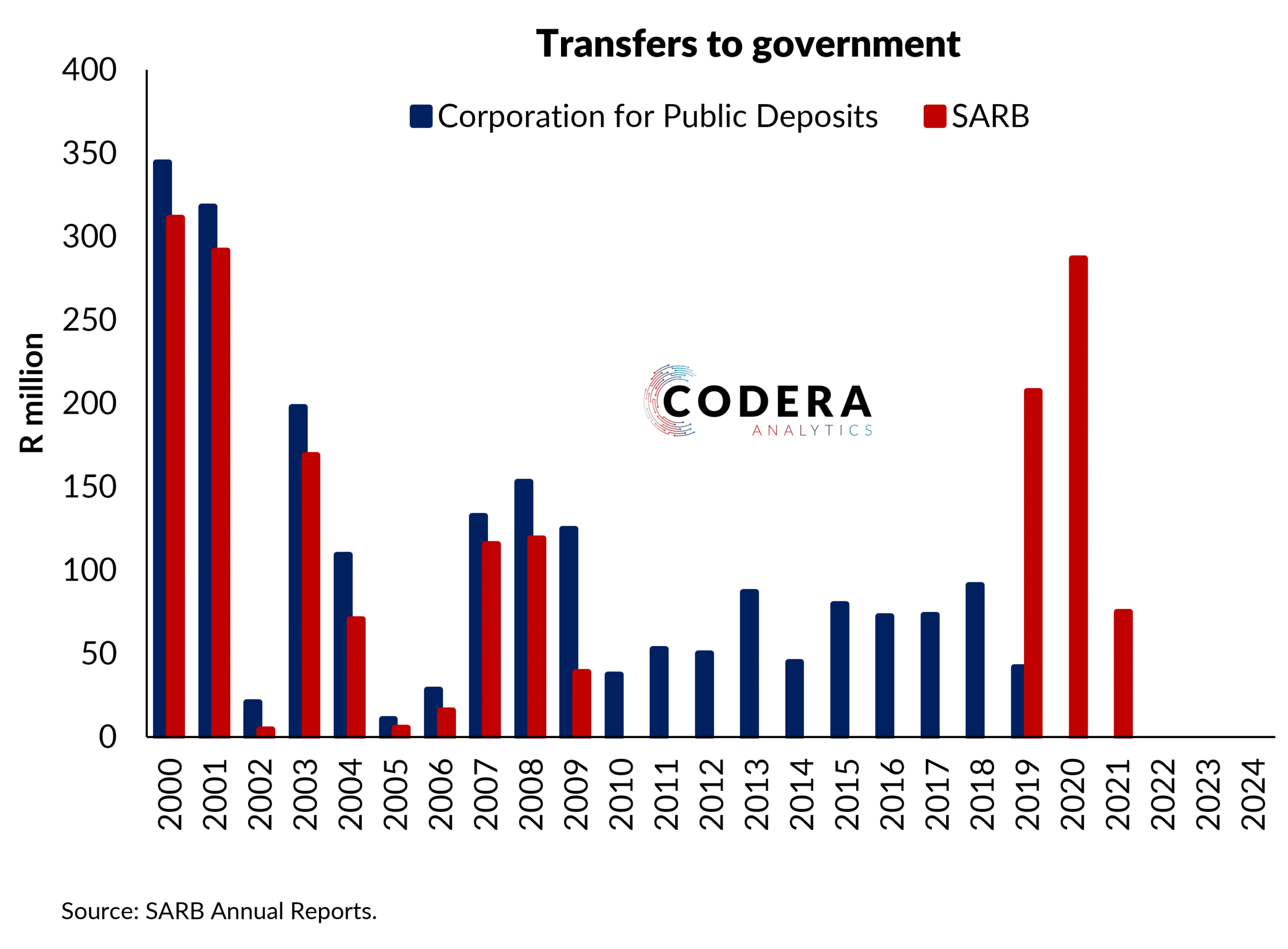
The SARB Act stipulates that 9/10ths of the SARB’s surplus after provisions and dividends must be transferred to government. The Corporations of Public Deposits (CPD) Act stipulates that the SARB Group that the balance of net profits after transfers to reserves and payment of dividends must be paid to government. The SARB did not transfer any income to the government between 2010 and 2019 and and has not transferred any income since 2021.
Nowcasting the SA Economy
We provide access extensive and unique datasets, proprietary nowcasts and exchange rate forecasts, and official forecasts from the IMF, SARB and Treasury. Using our R and Python packages and Excel plugin you can easily keep your chartpacks, analysis or models up-to-date or access our projections. This slidepack provides examples of our nowcast offering, covering macroeconomic nowcasts and FX and fixed income analytics that incorporate alternative/big data analysis.

Required private sector inflation under 3% target in SA
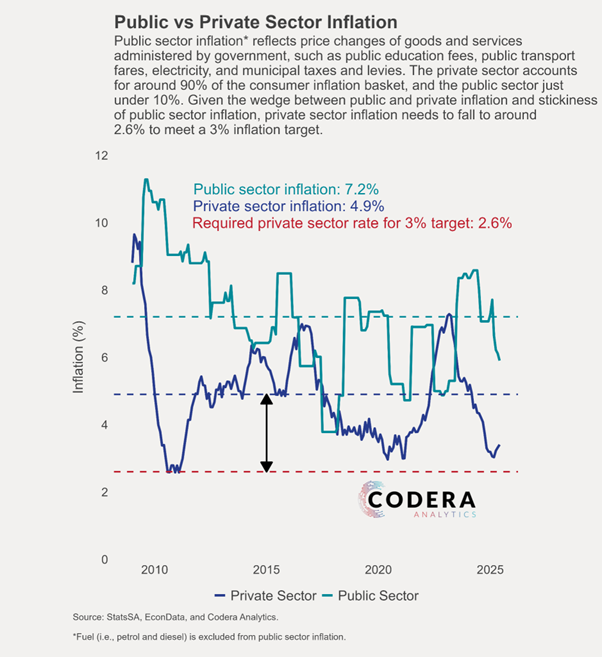
Today’s post by Oliver Guest shows that public sector inflation has averaged 7.2% since 2009, compared to 4.9% for private sector inflation (excluding fuel inflation). Given the wedge between public and private inflation and our expectation that government inflation will remain elevated, private sector inflation would need to fall to around half of its average level since 2009 (just under 2.6%).
Understanding South Africa’s investment freeze
In this Business Day article we argue that the root cause of South Africa’s stagnation is a philosophy of interventionism that assumes growth requires redistribution, subsidies and protection:

The IMF on the costs and benefits of lowering the inflation target in SA
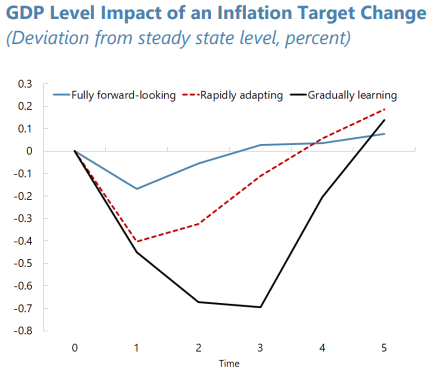
The IMF recently published a selected issues report on South Africa that includes analysis of the macroeconomic effects of a potential change in South Africa’s inflation target. This post summarises the paper.
South Africa’s Coffee Trade
This post by Jan-Hendrik Pretorius describes South Africa’s coffee trade with countries around the world. South Africa was a net importer of coffee in 2024, importing an estimated 25 million kilograms, mostly from Brazil, and exporting just less than an estimated 3 million kilograms. Most coffee exports were with neighbouring countries: Namibia (820 thousand kilograms), Botswana (630 thousand kilograms), and Mozambique (330 thousand kilograms).

SA’s implied rate of capital depreciation
The difference between gross and net investment is depreciation – that portion of investment spent to replace worn out capital. The chart below shows that the gap between gross and net investment has been rising in South Africa. Gross and net investment to GDP have fallen by around 4% each since 2010, relative to their pre-2009 averages. The share of new investment in total investment has also fallen, implying that the share going to replacing old capital has been rising. This growing gap signals the need for more investment to sustain long-term economic growth.

South African PhDs conferred
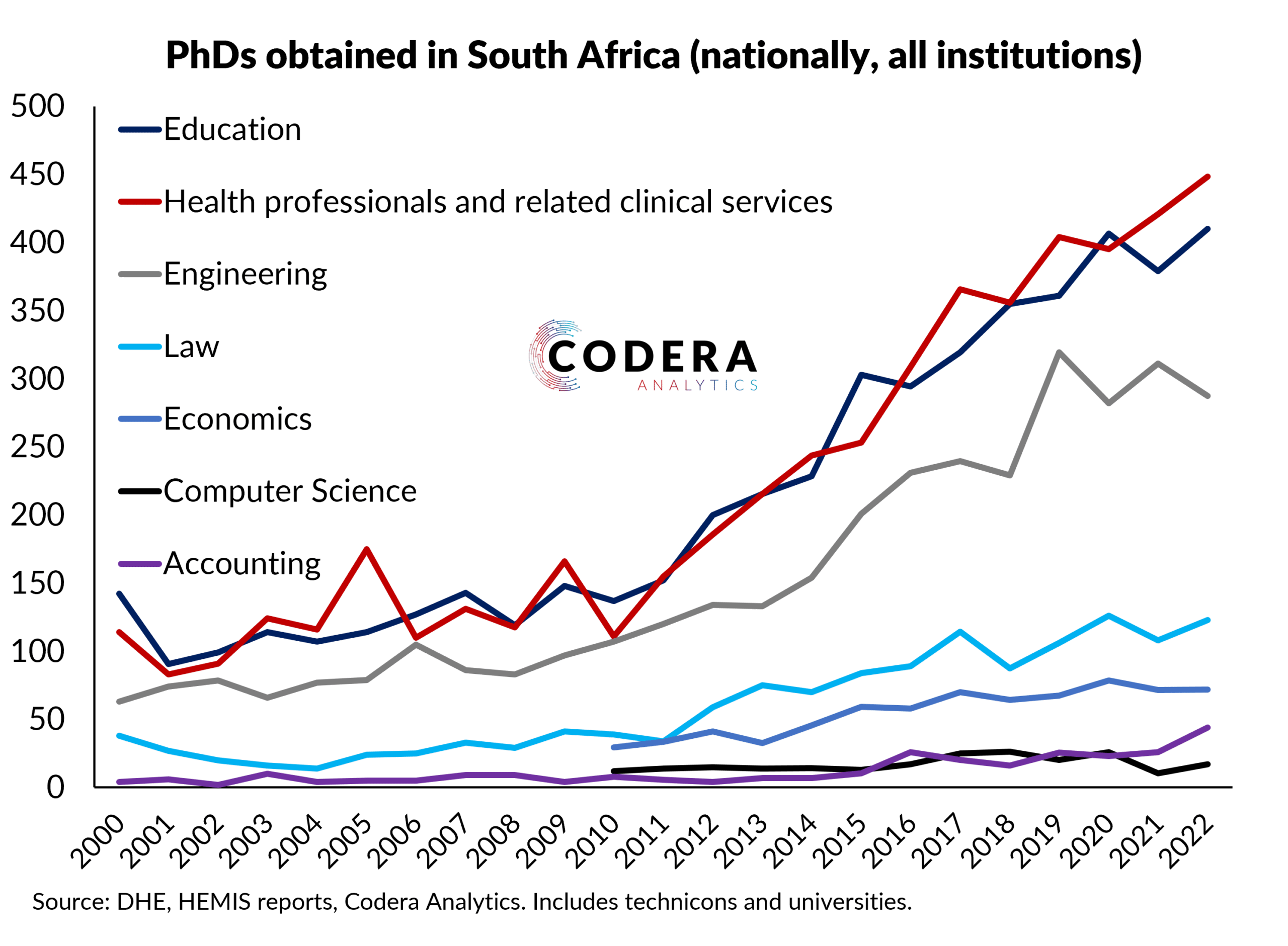
The number of PhDs conferred in Education, Health care and Engineering in SA have grown strongly since 2010.
Company tax receipts in South Africa by income level
Companies earning over R200 million in taxable income (around 500 companies) contributed almost 70% of the total company tax take in South Africa in 2023. Around 70% of companies did not earn positive taxable income in 2023.