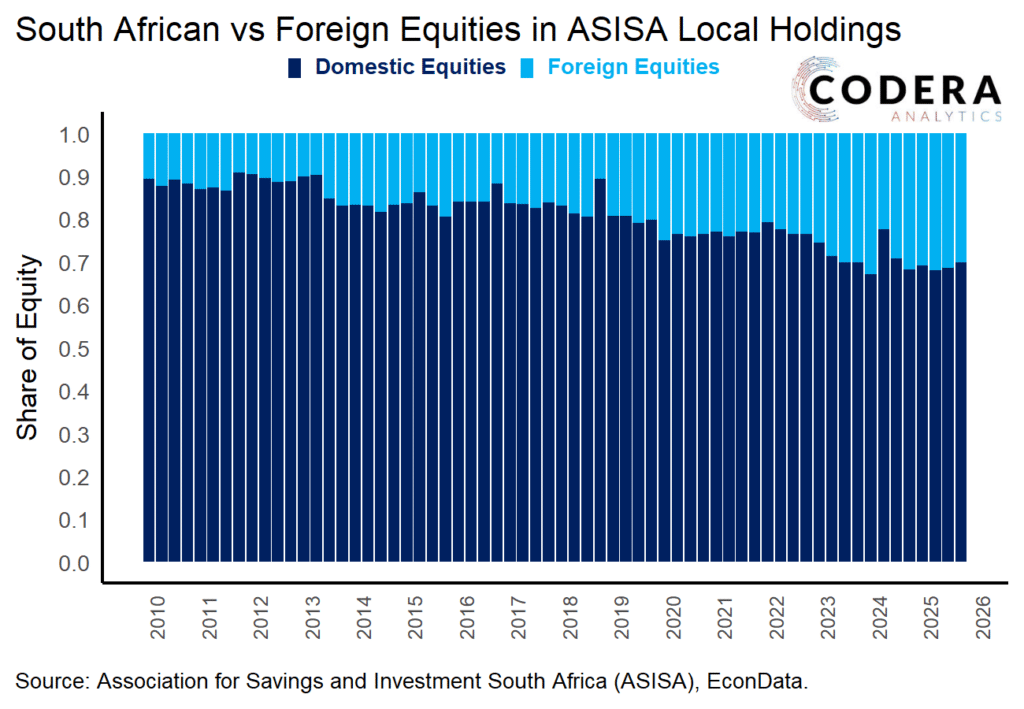
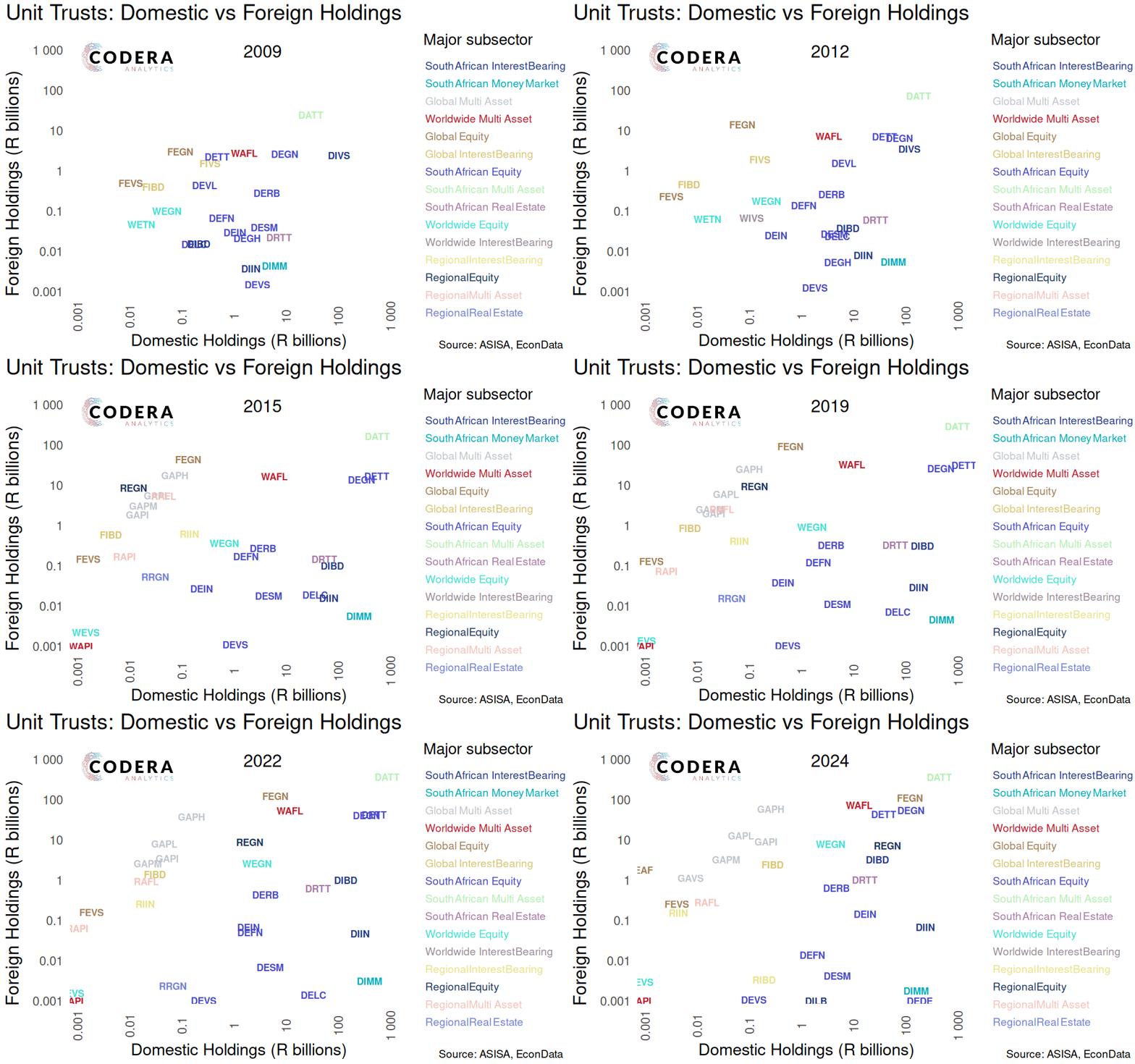
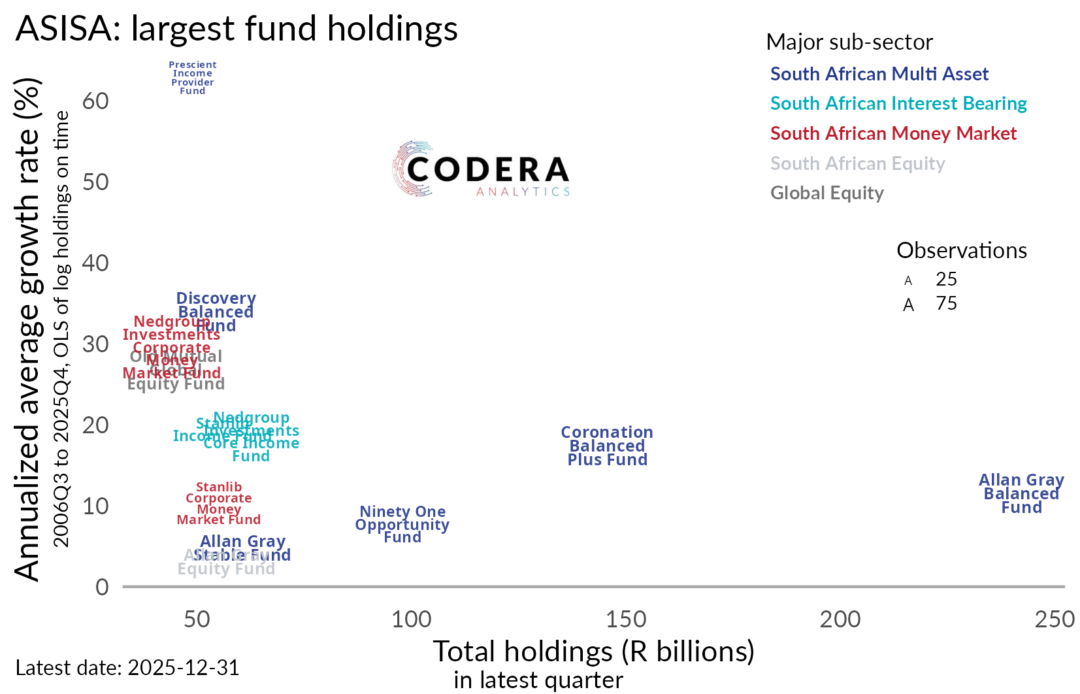
Regulation 28 of the South African Pension Funds Act limits exposures to foreign assets and specific domestic asset classes, with the stated aims of protecting pension fund investments from poorly diversified portfolios and channel funds to areas that stimulate economic growth. This regulation inherently reinforces home bias by capping the amount that South African collective investment schemes can allocate to foreign assets, making it challenging to achieve broader global diversification.
Today’s post by Lisa Martin shows that there has been an increase in foreign exposure by South African collective investment schemes since the limit was raised from 30% to 45% in 2022. Not all funds have an offshore investment mandate, with fund-by-fund figures showing that funds that do have foreign exposure that are generally close to the regulatory cap. This reveals a preference for greater diversification and exposure to global markets and inclination to mitigate country-specific risks, such as economic uncertainty or currency volatility. While comparisons are always sensitive to the sample period used, we have shown in earlier posts (here, here and here), foreign equities (particularly US equities) provided higher returns at relatively lower risk than the JSE All Share in USD terms since 2010. The same is true in ZAR terms, although the volatility of returns has been higher for some foreign equities. The implication is that Regulation 28 has served to restrict potential growth opportunities that international markets might offer.
As far as we are aware, EconData’s is the only source of detailed Association for Savings and Investment South Africa (ASISA) data in an easy to access format. Contact us for a demo.