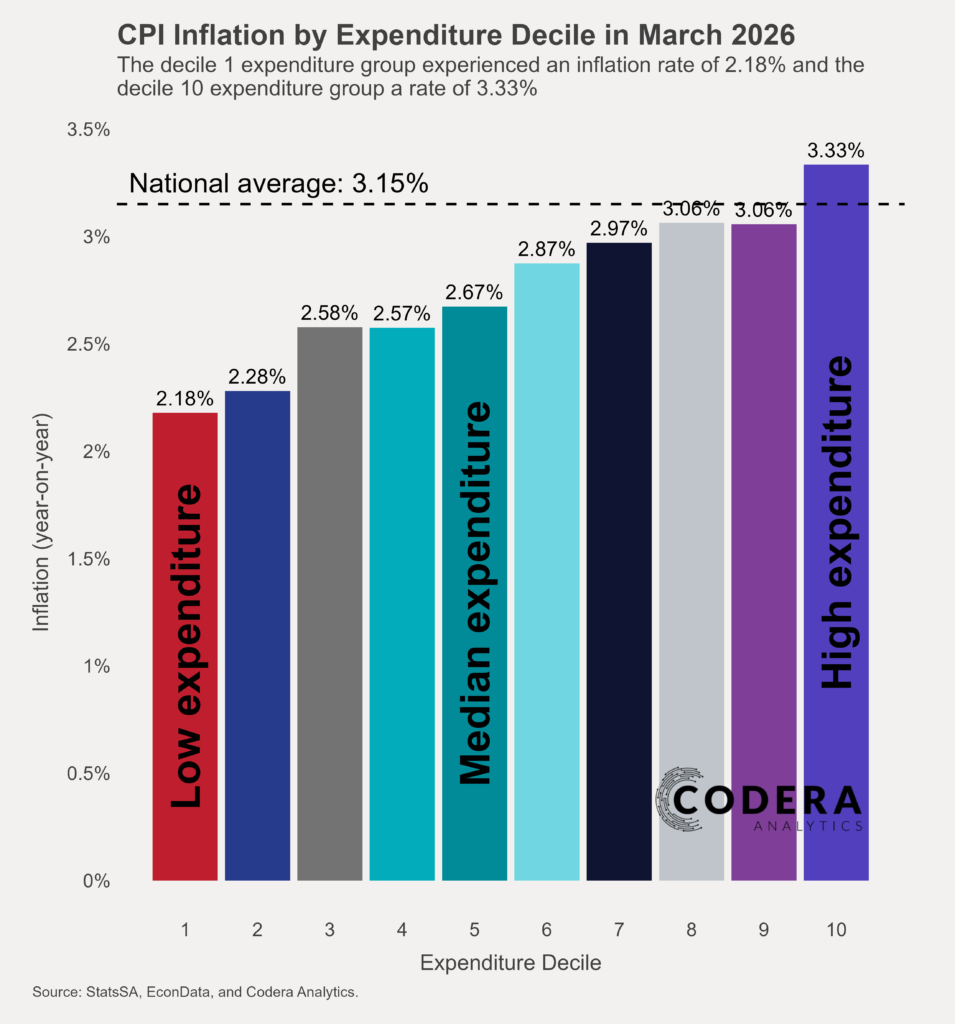
Low-income individuals (decile 1, low spenders) have typically experienced higher inflation than the wealthiest group in South Africa (decile 10, high spenders). Since the pandemic, low-income individuals have typically experienced higher inflation—about 2 percentage points more than the wealthiest group. But the poor experience much more inflation volatility – almost 5 times more than the rich. This is because food is the major contributor to the inflation experienced by South Africa’s poorest, while rich people consume a more diverse set of goods and services, with housing and utilities playing a larger role in driving their inflation outcomes, on average. Today’s post by Oliver Guest shows that in March 2026, official statistics imply that wealthy consumers experienced higher increases in costs of living, as a result of relatively low food price inflation, amongst other reasons.