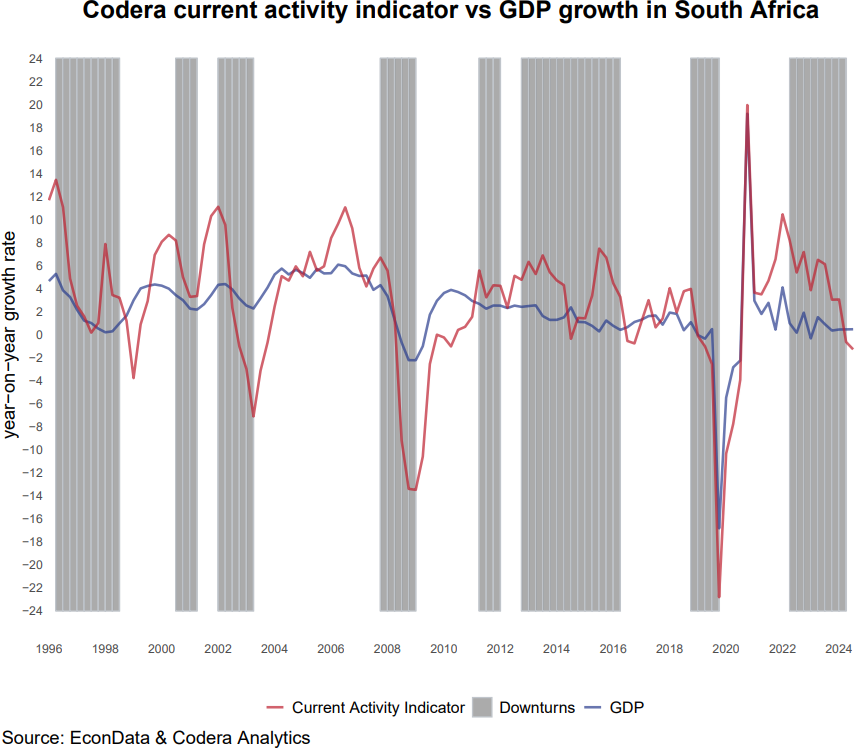
One often sees newspaper articles reporting on what confidence survey results or SARB’s leading indicator means for the next GDP print. Today’s post by Jurgens Fourie shows that these commonly used advanced indicators of GDP for South Africa do not have high correlations with GDP contemporaneously, or with future values of GDP.
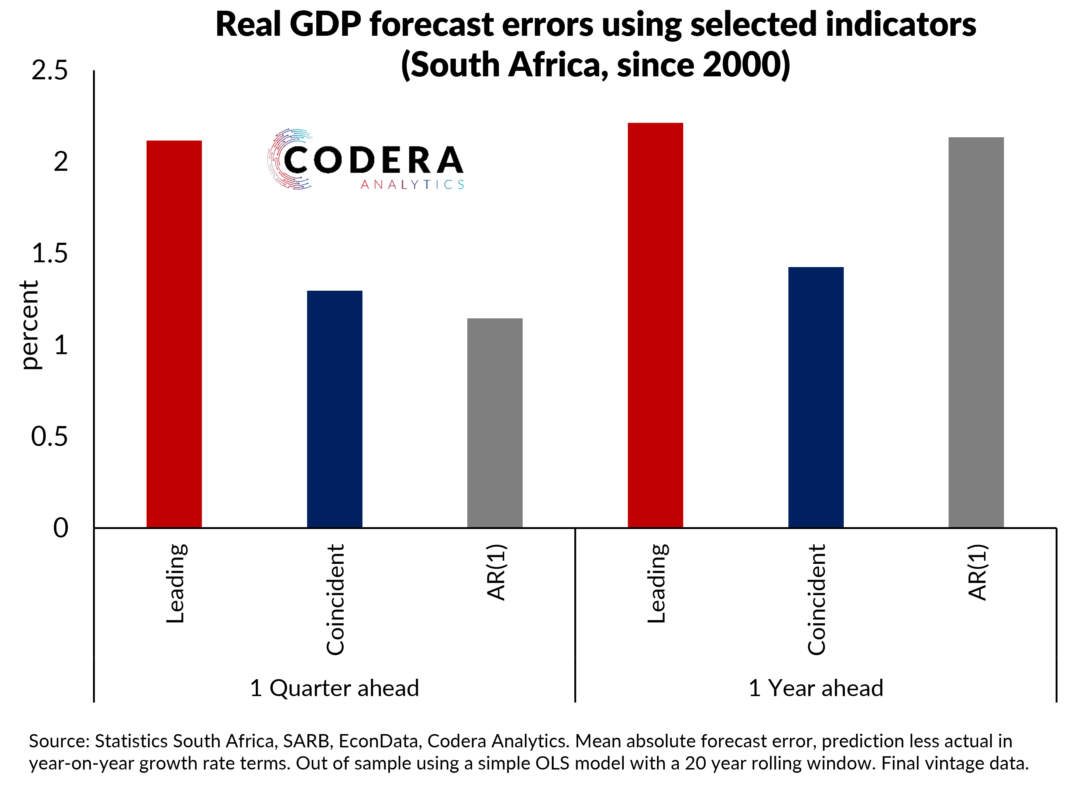
We also showed in our paper on forecasting economic downturns that the South African Reserve Bank (SARB)’s Leading Indicator does not improve predictions of the business cycle relative to GDP itself. Our results suggest that many of the macroeconomic variables considered by analysts as leading indicators do not provide good signals of GDP growth or developments in the South African business cycle.
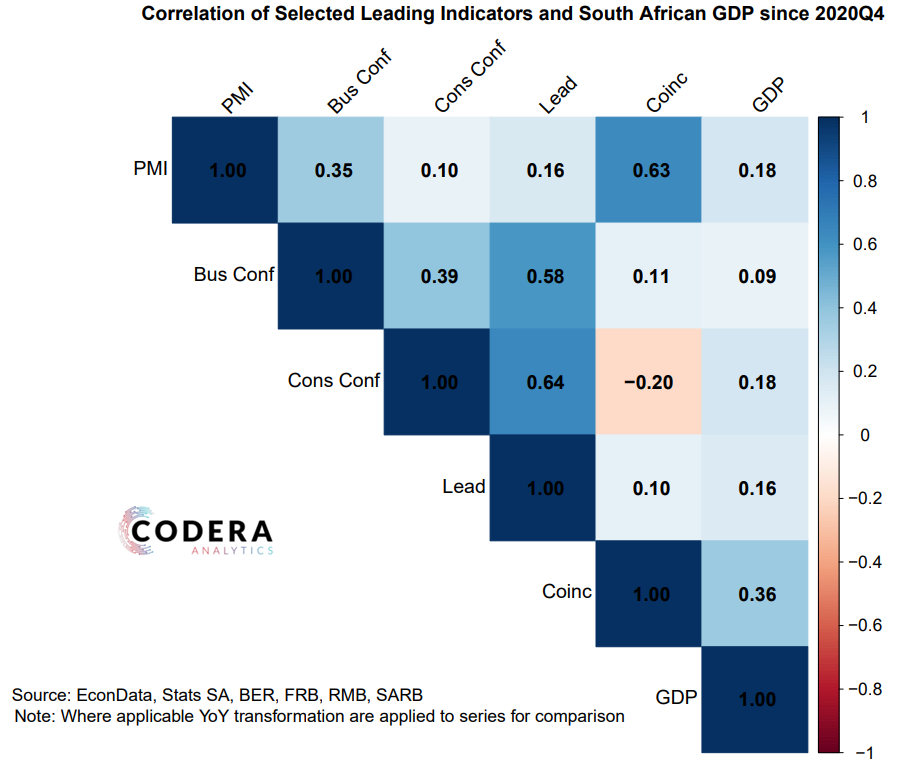
The first chart shows the contemporaneous correlations between the indicators and real GDP growth. The SARB’s coincident indicator has a correlation of only 0.36 with GDP, while the PMI’s and Consumer Confidence’s are half that, and Business Confidence only a quarter thereof.
The second chart shows the contemporaneous correlations between the indicators and real GDP growth if expressed in quarter-on-quarter terms instead to capture momentum. Here all indicators have negative correlations with GDP.
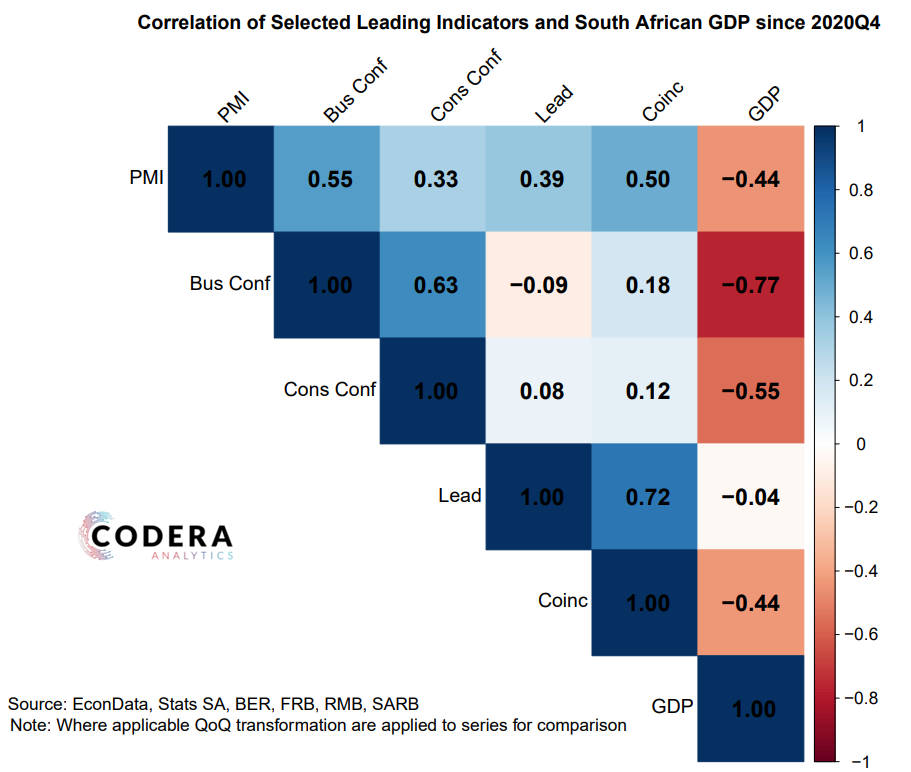
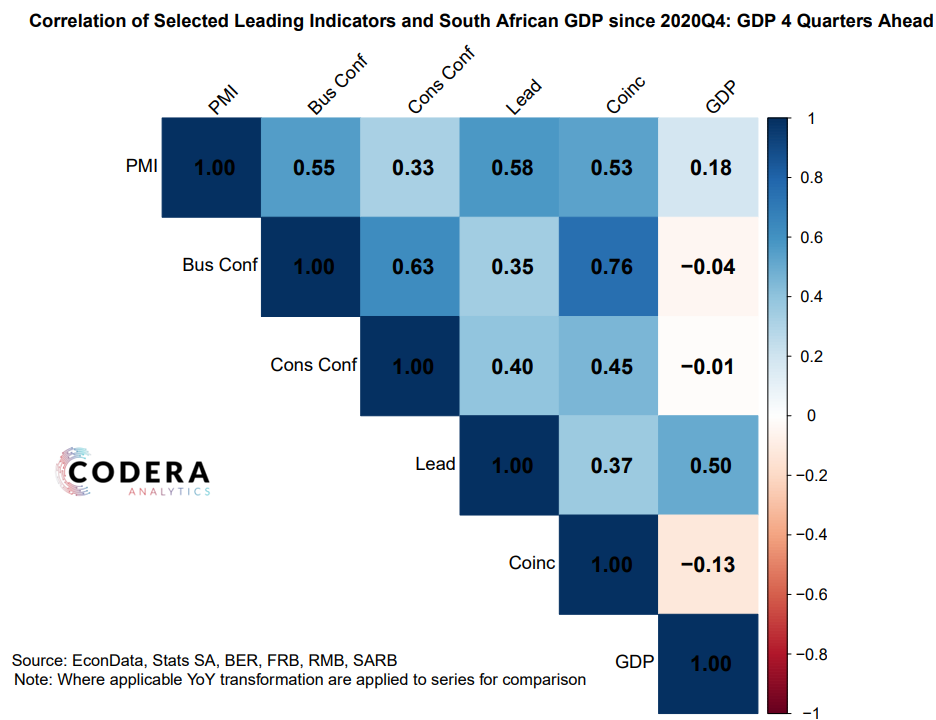
What about the ability of the indicators to act as leading indicators? The figure below looks at how GDP one year ahead has correlated with the current values of the indicators. The SARB’s leading indicator has a correlation of only 0.5, while many indicators have negative correlations.