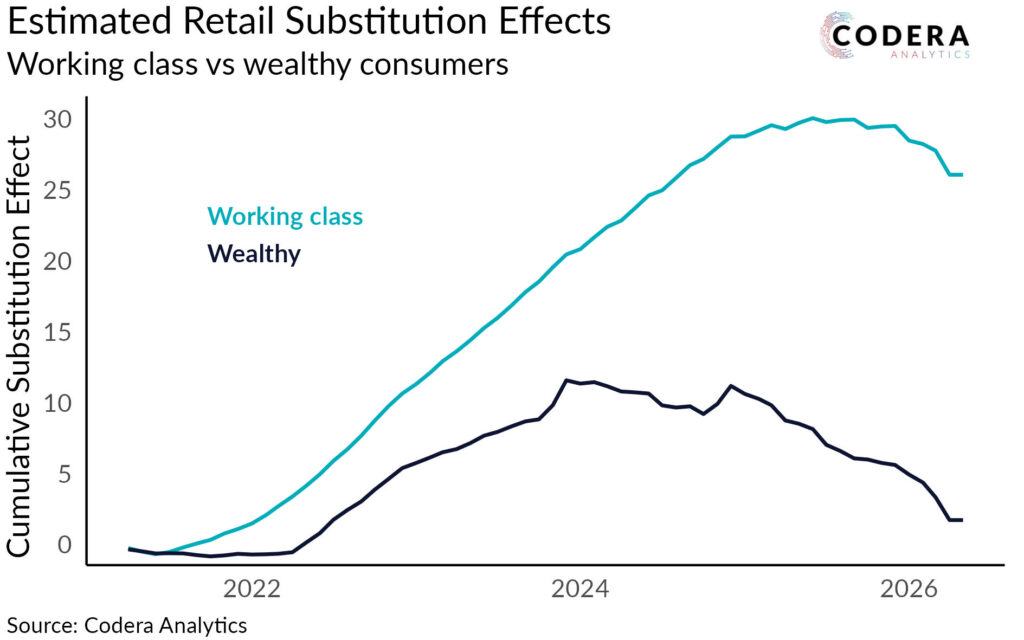
In today’s post we use retail data to measure how different consumer segments respond to price increases by measuring changes in basket compositions in relation to changes in prices. The chart shows a measure of the average cumulative substitution effect across different affluence groups. A higher substitution value means consumers are substituting to cheaper items when prices increase. We see that working class consumers tend to substitute more when prices rise than wealthy consumers. During the cost-of-living crisis of 2022/23, both working class and wealthy consumers shifted to cheaper products. If working class consumers did not substitute towards cheaper items, they would have paid more than 25% more over the period for their goods between mid-2021 and early 2024. The declining cumulative substitution effects over the past year imply that consumers have started buying more expensive goods again. The coming spike in inflation will have different effects on the consumption patterns of different consumer segments. EconData provides access to proprietary retail indicators at monthly frequency and detailed spatial disaggregation. Contact us for a quote for a subscription.